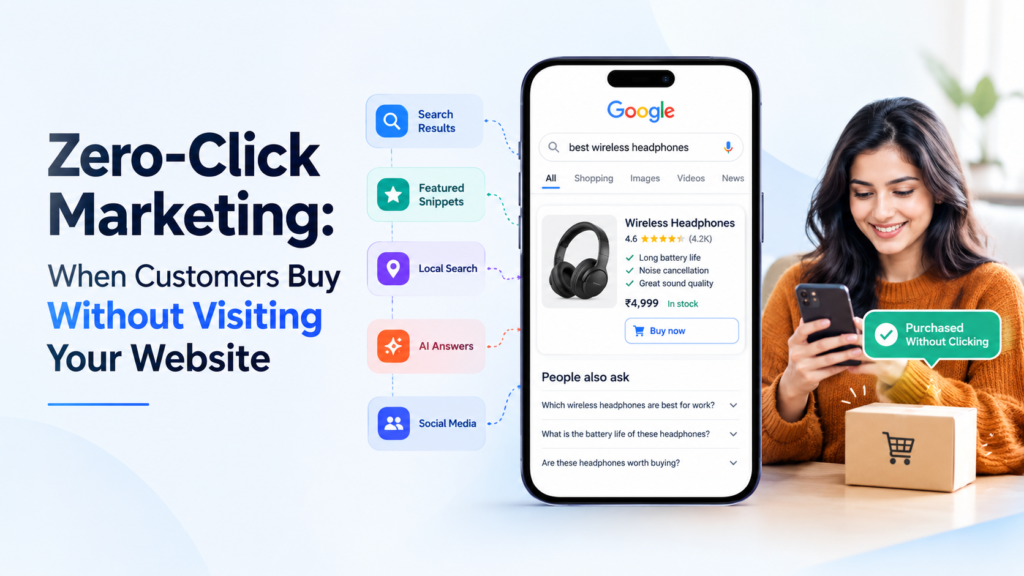
The way people search for information online is changing rapidly. Earlier, a typical search journey was simple: a user entered a query on Google, clicked on a website, read the information, and then decided what to do next. Today, that journey is becoming much shorter. Search engines, social platforms, and AI-powered tools can provide answers directly on the search results page, often without requiring users to visit a website. This shift has created a new digital marketing concept known as Zero-Click Marketing.
A Zero-Click Search happens when users find the information they need directly on a search platform without clicking through to another website. Featured snippets, People Also Ask results, local business information, knowledge panels, and AI-generated answers are some common examples. As Zero-Click Searches continue to influence how people discover information, brands need to think beyond traditional website traffic and rankings.
This is where a Zero-Click Marketing Strategy becomes important. Instead of focusing only on getting users to click a link, brands can focus on becoming visible wherever their audience is searching. This can include Google Search, social media platforms, AI assistants, and emerging AI search experiences. In other words, the goal is to make your brand discoverable, useful, and trustworthy even before a user visits your website.
The rise of AI Search Marketing is accelerating this transformation. AI-powered search can summarize information, answer questions, compare options, and recommend sources within the search experience itself. This means businesses increasingly need to understand AI Search Optimization alongside traditional SEO.
In this guide, we will explore how Search Without Clicking is changing digital marketing, why Google Zero-Click Search matters, and how businesses can build an effective Zero-Click Content Strategy. We will also look at practical strategies for improving search visibility, building brand authority, optimizing content for AI-powered discovery, and measuring success beyond website clicks.
The future of search is not necessarily about getting every user to click. It is about making sure your brand is visible and valuable at the exact moment people are looking for an answer.
What Is Zero-Click Marketing?
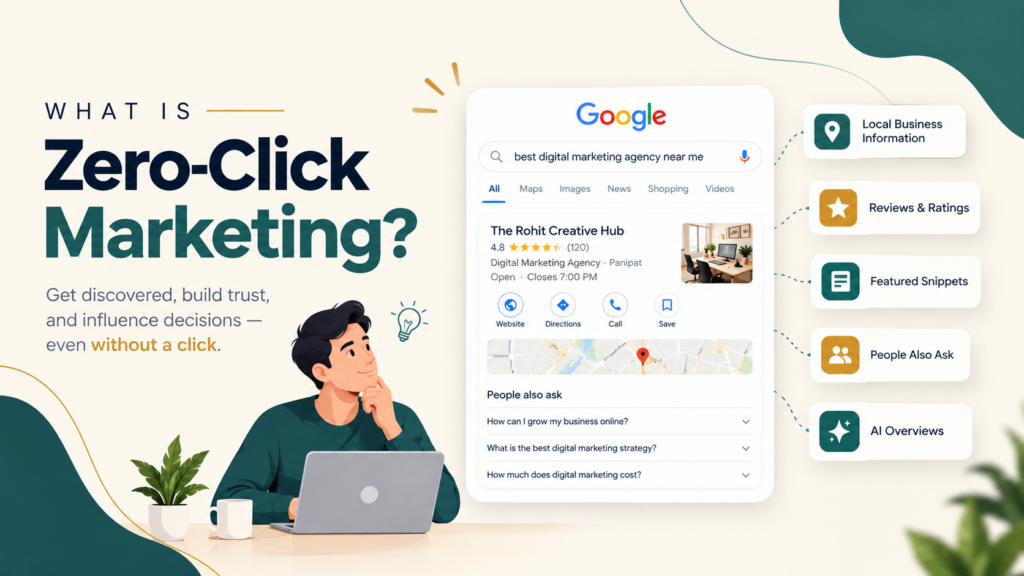
Zero-Click Marketing is a digital marketing approach focused on making a brand visible and useful even when users do not click through to a website. In traditional digital marketing, businesses often measure success through website traffic, clicks, and page visits. Zero-click marketing expands that approach by focusing on what happens before the click—whether users see your brand, find an answer, remember your business, or develop trust through search and digital platforms.
To understand this concept, it is important to understand a Zero-Click Search. A zero-click search occurs when a user enters a query and gets the information they need directly within the search experience, without clicking a result to visit another website. Search engines may display featured snippets, local business information, definitions, calculations, related questions, or other direct answers. With the growth of AI-powered search, users can also receive summarized answers without opening multiple web pages.
This creates an important difference between Zero-Click Searches and traditional searches. In a traditional search journey, the user typically searches for something, scans the results, clicks a website, and continues reading there. In a zero-click journey, the user may get enough information directly from the search results to make a decision without visiting the source website.
For example, imagine someone searches “What is SEO?” Instead of opening a digital marketing website, they may see a short definition directly in the search results. The user has received the information, but the website may not receive a corresponding click. However, if the website’s content appears prominently in that result, the brand still gains visibility and can potentially build authority and recognition.
Consider another real-world example. Someone searches “digital marketing agency near me.” They may immediately see business names, ratings, locations, services, and contact options within the search experience. The person may call or message a business without first visiting its website. This is Search Without Clicking in action.
Therefore, Zero-Click Marketing does not mean that website traffic is no longer valuable. Instead, it means businesses need to optimize for the entire discovery journey. The objective is to ensure that your brand can provide useful answers, demonstrate expertise, and remain visible across search engines, social platforms, and AI-powered experiences—even when the user never clicks.
Why Zero-Click Searches Are Changing Digital Marketing
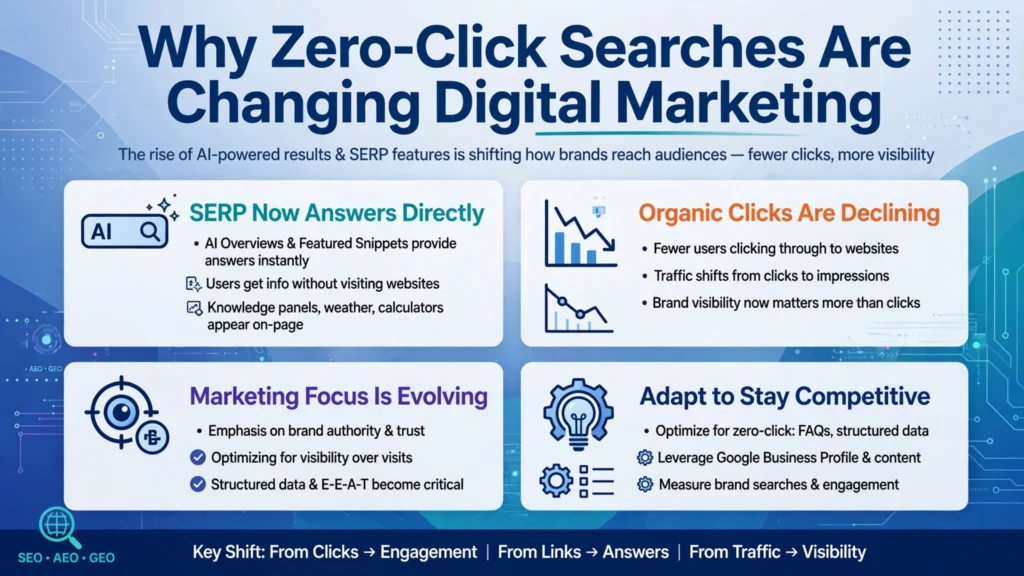
The digital marketing landscape is changing because people are no longer dependent on website visits to find information. Search engines, social platforms, and AI-powered tools are increasingly answering questions directly within the discovery experience. This shift is making Zero-Click Searches an important part of modern marketing and changing the way brands think about visibility, content, and conversions.
One major reason behind this change is Google featured snippets. When someone searches a question, Google can display a short answer at the top of the results page, allowing users to understand the topic without opening a website. Other search features, such as People Also Ask, local results, and knowledge panels, can provide information immediately. For marketers, this means ranking is no longer only about getting a user to click a blue link; being visible in the answer itself can also matter.
Another major development is AI-generated search answers. AI-powered search experiences can summarize information from multiple sources and present a conversational response. Instead of visiting several websites, users can receive a synthesized answer in one place. This is accelerating the growth of AI Search Marketing and increasing the importance of content that is clear, authoritative, structured, and easy for search systems to understand.
Voice search is also contributing to the shift. When people ask questions through smartphones, smart speakers, or other voice-enabled devices, they often expect a quick answer rather than a list of websites. This creates more opportunities for businesses that publish concise, question-focused content.
At the same time, social media search is becoming an important discovery channel. Users increasingly search platforms such as YouTube, Instagram, TikTok, and LinkedIn for tutorials, product recommendations, reviews, and solutions. For many audiences, social platforms are now part of the search journey.
Finally, AI assistants are changing how people discover brands and information. Users can ask conversational questions and receive recommendations or explanations without traditional browsing.
These developments reflect a broader change in user search behaviour. People increasingly want faster, clearer, and more convenient answers. For businesses, Zero-Click Marketing means adapting to this behaviour by becoming visible and useful across every place where customers search—not just on the website itself.
Zero-Click Marketing vs Traditional Digital Marketing
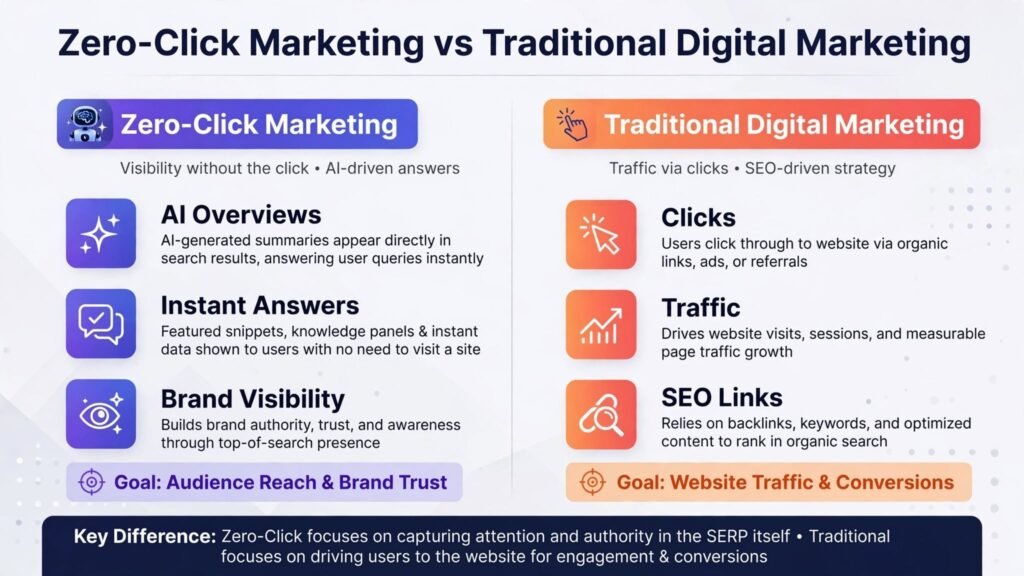
Digital marketing has traditionally focused on attracting users to websites through search engine rankings, paid advertisements, social media campaigns, and content marketing. Businesses generally measured success through website clicks, organic traffic, page visits, and lead generation. However, the rise of Zero-Click Marketing is changing this approach by placing greater importance on search visibility, brand exposure, and customer engagement, even when users do not visit a website.
The primary difference between traditional digital marketing and a Zero-Click Marketing Strategy lies in how brands reach and engage their audiences. Traditional marketing aims to encourage users to click on links and explore website content, whereas zero-click marketing focuses on delivering valuable information directly through search results, AI-generated answers, social media platforms, and other digital channels.
| Traditional Digital Marketing | Zero-Click Marketing |
| Focuses on website clicks | Focuses on search visibility |
| Measures website traffic | Builds brand exposure |
| Prioritizes search rankings | Targets answers and brand mentions |
| Encourages page visits | Strengthens brand recall |
| Uses click-based measurement | Tracks visibility and conversion signals |
For example, a traditional SEO strategy might aim to rank a blog post on the first page of Google and encourage users to visit the website. In contrast, a Zero-Click Search strategy may focus on getting a brand’s content featured in Google’s featured snippets, AI-generated answers, or People Also Ask sections. Even if users do not click through, they may still recognize the brand and remember it when they need a relevant product or service.
Similarly, traditional social media marketing may focus on directing followers to a website through links, while zero-click content can provide useful information directly within posts, reels, carousels, and videos. This approach helps businesses reach audiences where they already spend time.
However, Zero-Click Marketing does not replace traditional digital marketing. Both approaches can work together. Website traffic remains valuable for detailed information, lead generation, and conversions, while zero-click strategies can expand brand discovery and awareness.
Ultimately, a balanced Zero-Click Content Strategy combines search visibility, valuable content, brand authority, and measurable business outcomes. Businesses can use both approaches to reach potential customers at different stages of the digital customer journey.
7 Powerful Zero-Click Marketing Strategies
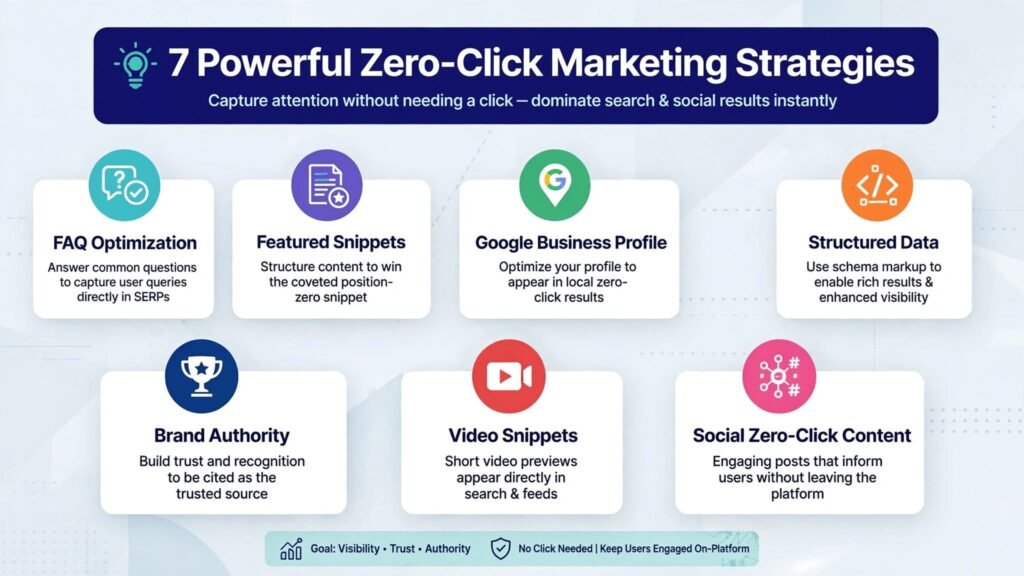
A successful Zero-Click Marketing Strategy is not about abandoning SEO, websites, or traditional marketing. Instead, it is about expanding your digital presence so that customers can discover your brand, find useful information, and build trust without always needing to click a website link. The following seven strategies can help businesses adapt to modern search behaviour.
1. Create Answer-Focused Content
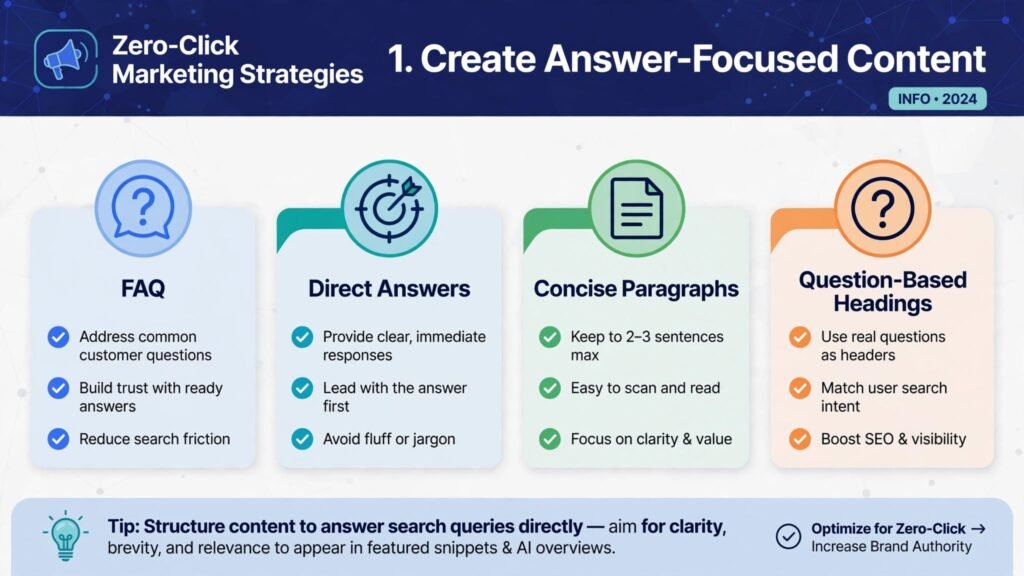
The first step in a strong Zero-Click Content Strategy is understanding what your customers actually want to know. Identify common questions, problems, and searches related to your products or services. Then create direct, concise answers that address those questions clearly.
FAQ sections, how-to guides, definitions, comparison content, and question-based blog posts can all help. Instead of making users search through long paragraphs, give them the key information early and then provide deeper details for those who want to learn more.
2. Optimize for Google’s Search Features
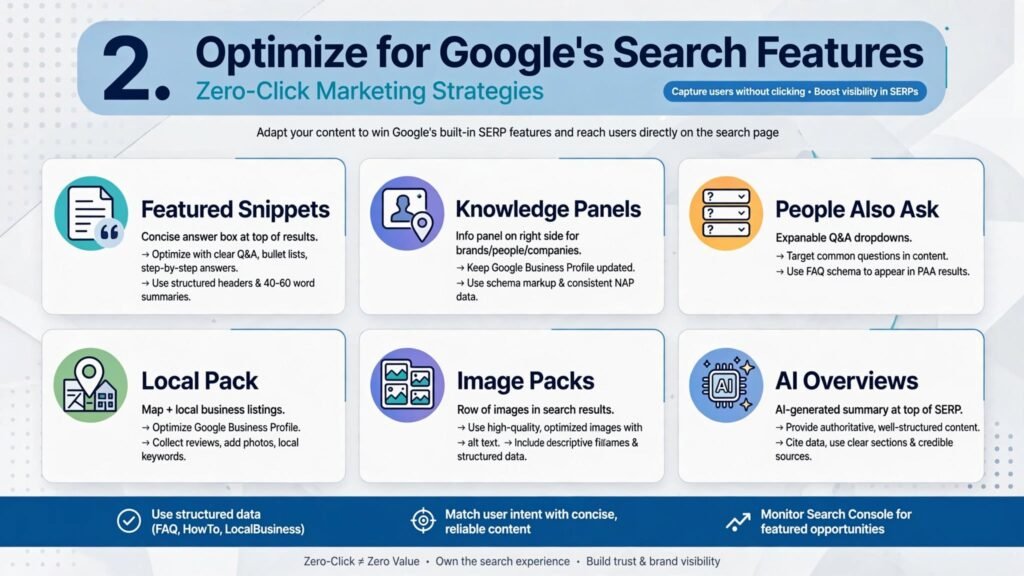
Google provides several features that can answer users directly. These include featured snippets, People Also Ask, knowledge panels, and local search results. Optimizing content for these formats can improve visibility in a Google Zero-Click Search environment.
Use clear headings, structured information, concise answers, relevant questions, and accurate business details to make your content easier for search systems to understand.
3. Optimize Your Brand for AI Search
AI-powered search is making brand discoverability increasingly important. AI Search Optimization involves creating authoritative, well-structured, and consistent information about your business, expertise, products, and services.
Entity-based content can help search systems understand what your brand represents and how different pieces of information are connected. Consistent business information across the web can also strengthen your digital presence.
4. Build Content Around Search Intent
Not every searcher wants the same type of information. Some users have informational intent, while others have commercial or transactional intent. Your content should match the purpose behind the search.
For example, someone searching “what is SEO” needs educational content, while someone searching “SEO agency pricing” may already be evaluating services. Matching search intent with question-based keywords makes content more relevant and useful.[https://yoast.com/search-intent/]
5. Turn Social Media Into a Search Engine
Social platforms are increasingly becoming discovery engines. Instagram, YouTube, and LinkedIn can all help users find information, businesses, creators, and solutions.
Use Social SEO techniques such as relevant keywords, search-friendly captions, descriptive titles, hashtags, and useful content. Your social posts should answer questions instead of relying only on promotional messages.
6. Strengthen Brand Authority
Visibility becomes more valuable when people trust the brand behind it. Publish expert content, collect genuine reviews, encourage relevant brand mentions, maintain consistent business information, and use digital PR where appropriate.
Strong brand authority can help businesses become recognizable across search engines, social platforms, and AI experiences.
7. Measure Visibility Beyond Clicks
Finally, measure more than website traffic. Track impressions, branded searches, search visibility, AI mentions, engagement, leads, and conversions.
A successful Zero-Click Marketing campaign can generate value even when every search interaction does not result in a website visit. The bigger objective is to build visibility, recognition, trust, and ultimately measurable business results.
How AI Search Marketing Is Changing Zero-Click Search
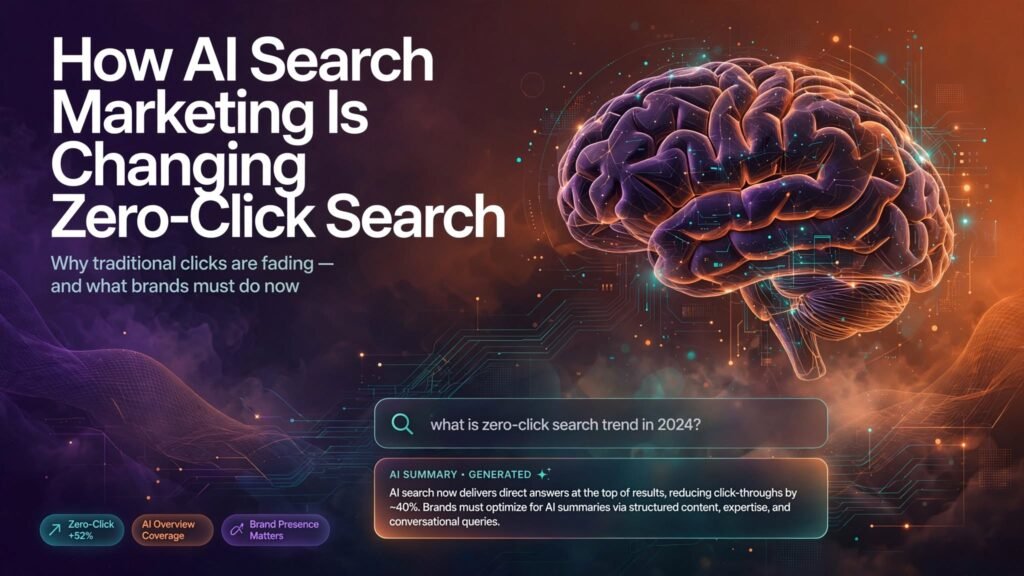
The rise of artificial intelligence is taking Zero-Click Search to the next level. Earlier, users searched on Google, scanned multiple results, and clicked a website to find an answer. Today, AI-powered search experiences can understand a query, generate a direct response, compare information, and even recommend solutions without requiring users to visit a website. This shift is creating a new form of Search Without Clicking, where visibility inside the answer can be just as important as ranking on a traditional search results page.
AI-Generated Answers Are Changing Search
AI-generated answers provide users with summarized information directly within the search experience. Instead of opening several webpages, users can receive a concise response based on information gathered from multiple sources. For brands, this means creating trustworthy, structured, and genuinely useful content is becoming increasingly important.
This is where AI Search Optimization becomes valuable. Businesses need content that clearly explains their expertise, services, products, and unique value so AI systems can better understand and reference their brand.
Conversational Search Is Becoming More Important
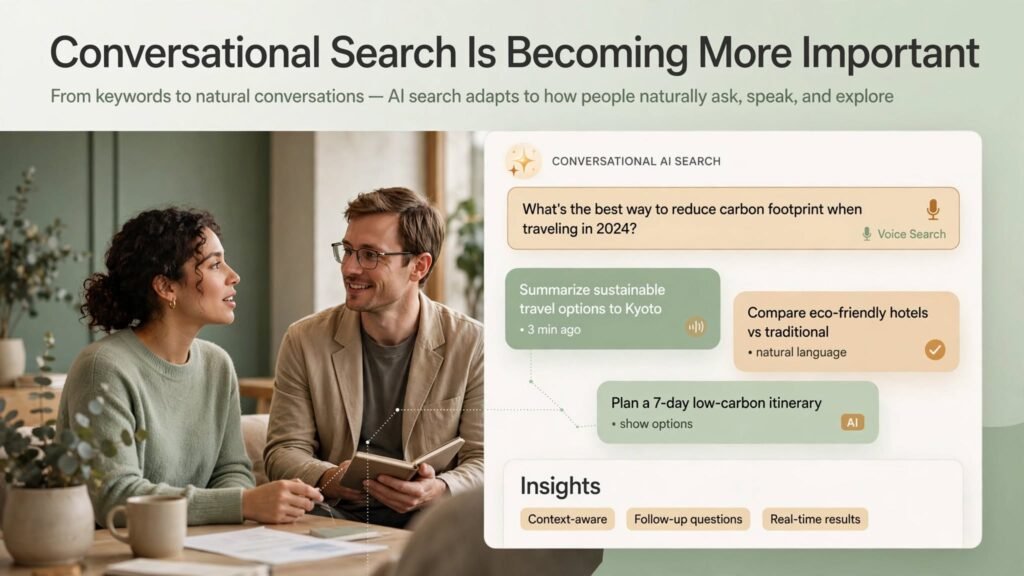
People are also changing the way they search. Instead of typing short keywords, users increasingly ask complete questions such as, “Which digital marketing strategy is best for a small business?” or “How can I improve my website visibility?”
This conversational behaviour creates opportunities for Zero-Click Marketing because brands can create content that directly answers these natural-language questions. A strong Zero-Click Content Strategy should therefore focus on real customer questions, search intent, and clear answers.
AI Recommendations and Brand Mentions
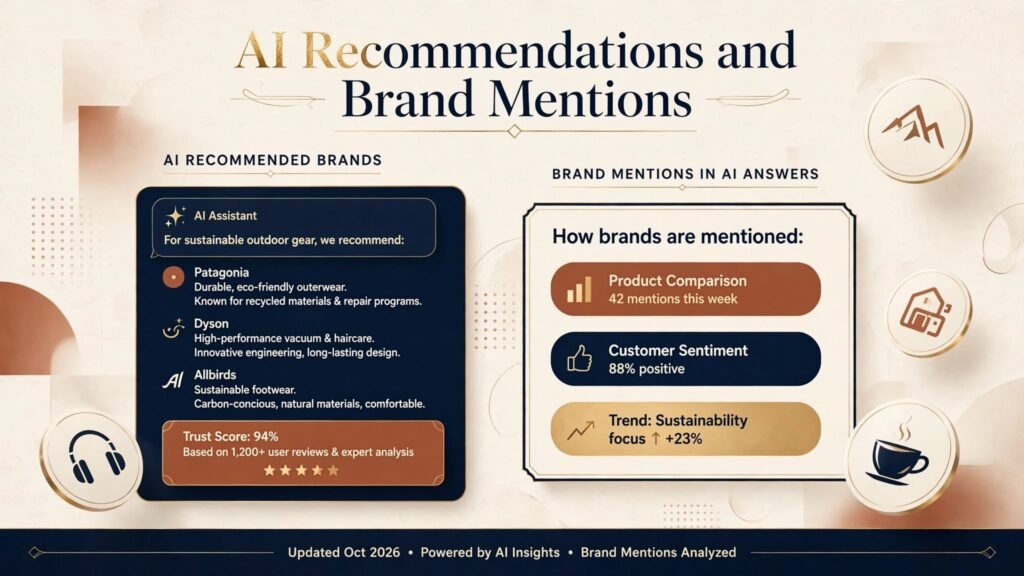
AI-powered platforms can go beyond answering questions and may recommend businesses, products, tools, or services based on the user’s query. When a brand is mentioned within an AI-generated response, it can gain awareness even if the user never visits its website.
This makes brand authority, consistent business information, expert content, reviews, and relevant online mentions increasingly valuable. The objective is not simply to appear in search results but to become a recognizable and trustworthy entity across digital platforms.
The Role of AI Search Marketing
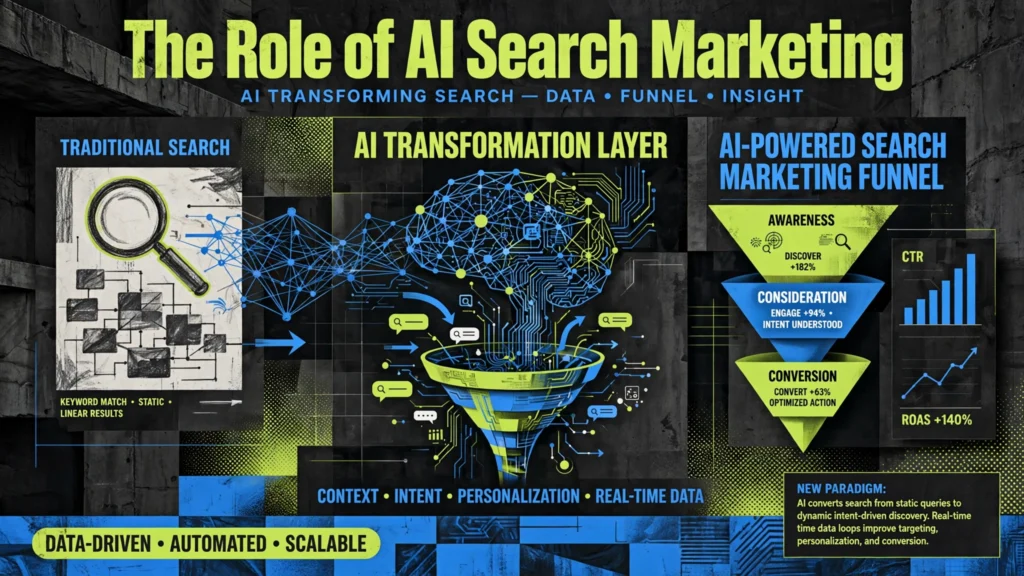
AI Search Marketing combines traditional SEO principles with strategies designed for AI-driven discovery. It focuses on making a brand understandable, authoritative, relevant, and discoverable across search engines and AI experiences.
This also creates a strong connection between SEO and GEO (Generative Engine Optimization). SEO focuses heavily on visibility in traditional search results, while GEO focuses on improving the likelihood of being represented or referenced within generative AI answers.
Together, SEO, GEO, and AI Search Optimization create a broader Zero-Click Marketing Strategy—one designed to make brands visible before the click, during the search, and throughout the customer’s decision-making journey.
Does Zero-Click Marketing Mean Website Traffic Doesn’t Matter?
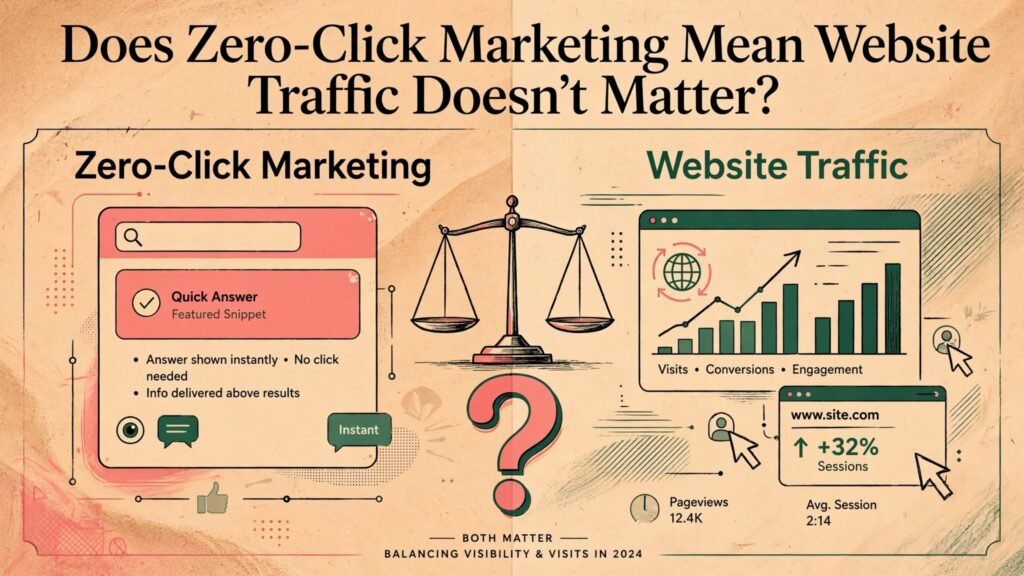
Zero-Click Marketing does not mean website traffic is no longer important. In fact, website traffic remains a valuable part of digital marketing because your website is often where discovery turns into deeper engagement, leads, and conversions. The real change is that businesses can no longer depend only on website clicks to measure their online visibility.
Why Website Traffic Still Matters
A website gives a brand a controlled digital environment where potential customers can explore services, products, pricing, case studies, reviews, and contact information. Search visibility may introduce a customer to your brand, but the website can provide the information needed to move that customer closer to a decision.
For example, a user might discover a digital marketing agency through a Google Zero-Click Search, an AI-generated answer, or a social media post. If the information builds enough interest, the next step may be visiting the website to learn more. This makes website traffic an important part of the overall customer journey.
Zero-Click Visibility vs Website Conversion
Zero-click visibility and website conversion serve different purposes.
Zero-Click Search focuses on getting your brand discovered without requiring a website visit. Your business might appear in a featured snippet, local result, People Also Ask section, social search result, or AI-generated response.
Website conversion happens when that interest moves to your website and produces an action—such as submitting a form, making a purchase, booking a consultation, or contacting your business.
Therefore, Zero-Click Marketing Strategy should not be viewed as a replacement for website traffic. Instead, it should work as an additional layer that creates awareness and trust before the click.
Discovery → Trust → Click → Conversion
Modern search behaviour can be understood as a connected journey:
Discovery → Trust → Click → Conversion
First, customers discover your brand through search engines, social platforms, AI tools, or other digital channels. Then, useful content and consistent brand information help build trust. Once the customer becomes interested, they may click through to your website. Finally, a strong website experience can turn that visitor into a lead or customer.
This is why Search Without Clicking can still contribute to business results even when no immediate website visit occurs.
Balancing Traffic and Visibility
A strong Zero-Click Content Strategy should aim for both visibility and measurable website outcomes. Brands should track impressions, mentions, branded searches, engagement, website sessions, leads, and conversions rather than focusing on clicks alone.
The goal is not to choose between traffic and visibility. It is to build a digital marketing system where Zero-Click Marketing creates discovery and authority, while the website turns qualified interest into meaningful business results.
How to Create a Zero-Click Marketing Strategy
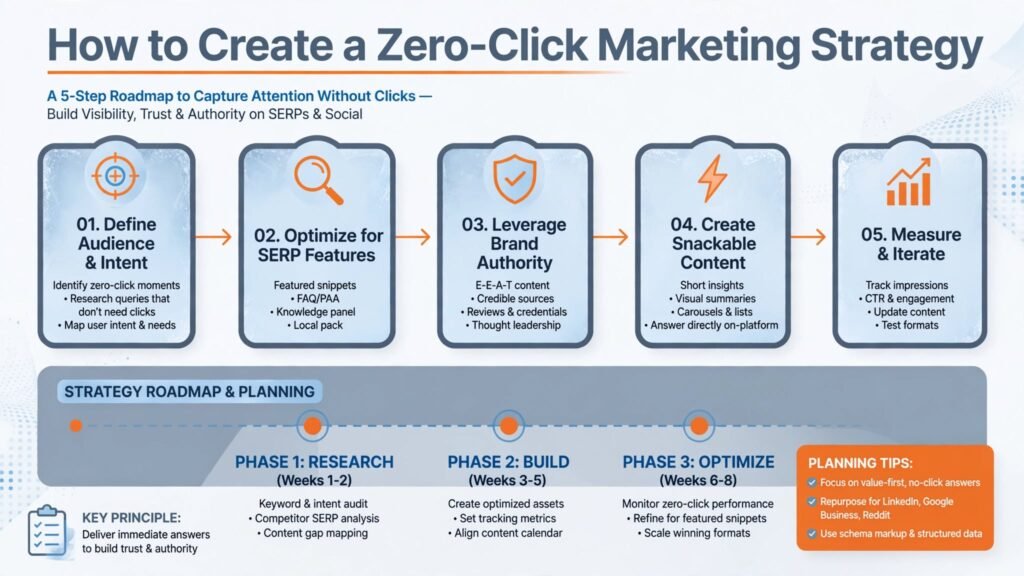
Creating a successful Zero-Click Marketing Strategy requires more than simply trying to rank on Google. The objective is to make your brand visible, useful, and trustworthy wherever customers search for information—including search engines, social platforms, and AI-powered search experiences. Here is a practical seven-step process.
Step 1: Find Real Customer Questions
Start by identifying the questions your target audience actually asks. Look at Google searches, People Also Ask, customer conversations, social media comments, forums, and frequently asked questions.
Instead of creating content only around broad keywords, identify specific problems customers want to solve. These questions can become the foundation of your Zero-Click Content Strategy.
Step 2: Map Search Intent
Every search has an underlying intention. A user may want information, compare options, find a specific service, or take an action.
Map your content according to informational, commercial, navigational, and transactional intent. Understanding search intent helps you create answers that match what users are actually looking for.
Step 3: Create Answer-Focused Content
Create content that answers important questions clearly and quickly. Start sections with concise answers, use descriptive headings, FAQs, bullet points, examples, and structured information.
The goal is to provide enough value that your content can potentially appear in a Zero-Click Search environment while still encouraging users to explore deeper information when they need it.
Step 4: Optimize for Search Features
Optimize your content for relevant search features such as featured snippets, People Also Ask, local results, knowledge panels, and other enhanced search elements.
Use clear formatting, question-based headings, concise explanations, and relevant structured information. This can increase your chances of gaining visibility even when users do not immediately visit your website.
Step 5: Build Topical Authority
Publishing one article is rarely enough to establish authority. Create a connected content ecosystem around your main subject.
For example, a digital marketing brand can create related content covering SEO, Google Ads, Meta Ads, content marketing, social media marketing, and AI search. Internal linking and consistently useful content can help establish stronger topical relevance.
Step 6: Optimize for AI Search
Modern AI Search Marketing requires brands to make their information easy to understand and verify. Clearly communicate your expertise, services, business information, authorship, and unique insights.
AI Search Optimization should focus on building credible, consistent, entity-rich content that can be understood across AI-powered search experiences.
Step 7: Track Visibility and Conversions
Finally, measure more than website clicks. Track search impressions, branded searches, featured snippet visibility, AI mentions, social engagement, website traffic, leads, and conversion rates.
A strong Zero-Click Marketing strategy connects visibility with business outcomes. The goal is not simply to appear everywhere—it is to become recognizable, trustworthy, and useful throughout the customer’s journey from discovery to conversion.
Zero-Click Marketing Examples
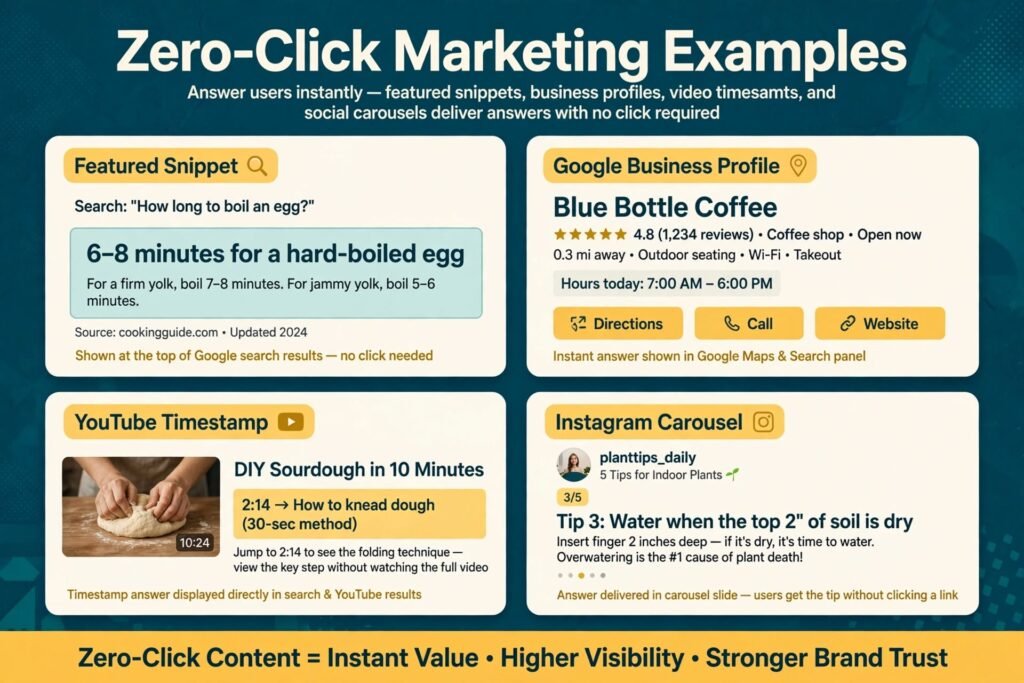
Understanding Zero-Click Marketing becomes easier when we look at how customers actually discover and evaluate businesses online. A customer does not always need to visit a website immediately after searching. Sometimes, the information they see directly in Google, social platforms, or AI-powered search experiences is enough to influence their next decision.
Here are three practical examples.
Example 1: Local Business
Imagine someone searches for “best digital marketing agency near me” or “digital marketing agency in Panipat.”
Instead of clicking through multiple websites, the user may first see a local business profile containing the company’s name, location, reviews, services, contact options, opening hours, and other useful information.
The journey can look like:
Google Search → Business Information → Reviews & Visibility → Customer Decision
This is a classic Zero-Click Search opportunity. Even if the customer does not immediately visit the website, a strong local presence can introduce the brand and provide enough information to influence the next step.
For local businesses, maintaining accurate business information, collecting genuine reviews, publishing useful content, and building consistent online visibility can support a strong Zero-Click Marketing Strategy.
Example 2: E-commerce Brand
Consider a customer searching for “best wireless headphones for office use”. Instead of visiting several product websites, the customer may first encounter product information, comparisons, recommendations, or an AI-generated answer.
If an e-commerce brand has well-structured product information, helpful comparison content, strong brand signals, and relevant online mentions, its products may become part of the customer’s discovery process.
The journey can look like:
Product Search → Google/AI Answer → Brand Discovery → Product Consideration → Purchase
This demonstrates why AI Search Optimization and AI Search Marketing are becoming increasingly relevant for e-commerce brands. The customer can discover a product or brand before visiting the actual store.
Example 3: Digital Marketing Agency
Consider a business owner searching for “best SEO agency” or “how to choose an SEO agency.”
The agency can create detailed, answer-focused content covering SEO strategies, pricing factors, common mistakes, agency selection criteria, and frequently asked questions.
The journey becomes:
Search Query → Informational Content → Brand Visibility → Trust → Lead
This is where a strong Zero-Click Content Strategy can create value. Even if the initial search produces an answer without a click, repeated exposure to useful and authoritative content can increase brand recognition.
For a digital marketing agency, the objective is therefore not simply to generate website traffic. It is to become visible and credible throughout the customer’s research journey.
These examples show that Search Without Clicking can be an important part of modern digital discovery. Whether it is a local business, e-commerce brand, or service provider, the core principle remains the same: be present with the right information at the moment your customer is searching.
Zero-Click Marketing Metrics to Track
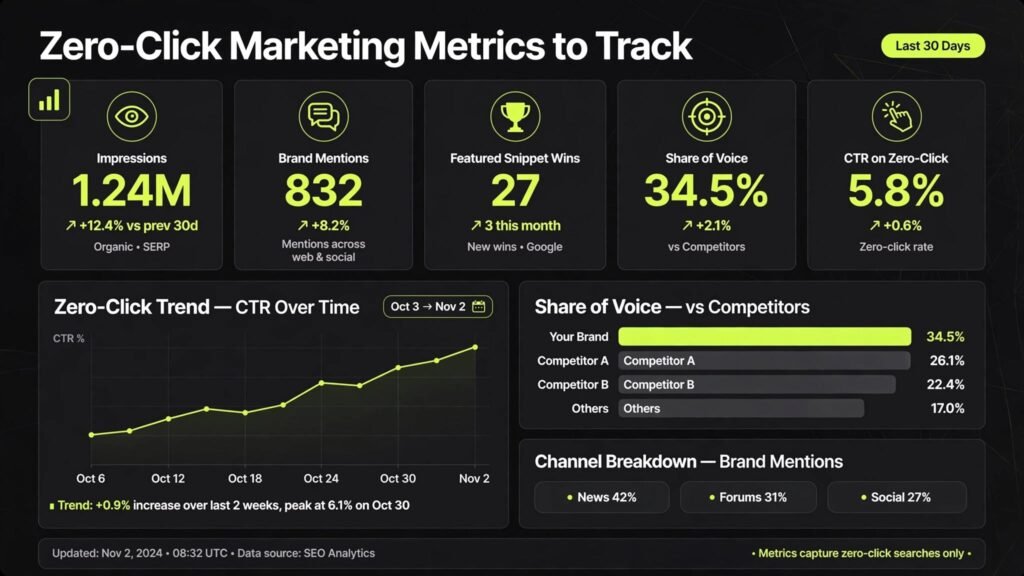
A successful Zero-Click Marketing Strategy cannot be measured only by website clicks. When users receive answers directly from Google, social platforms, or AI-powered search tools, a brand may influence a customer without generating an immediate website visit. That is why businesses need a broader set of visibility, engagement, and conversion metrics.
Here are the key Zero-Click Marketing metrics to track:
1. Search Impressions
Search impressions show how often your content or brand appears in search results. A growing number of impressions can indicate that your content is gaining visibility, even when users do not click every time.
2. SERP Visibility
SERP visibility measures how prominently your brand appears across search engine results pages. Track rankings, relevant search features, and visibility for important keywords to understand how often customers encounter your brand during their searches.
3. Featured Snippet Appearances
Featured snippets can place your content directly above traditional organic results for certain queries. Monitoring featured snippet appearances helps you understand whether your answer-focused content is being surfaced for relevant searches.
4. Brand Mentions
Brand mentions measure how frequently your business is referenced across websites, social media, publications, communities, and other digital platforms. Consistent mentions can contribute to brand awareness and authority.
5. Branded Searches
Branded searches occur when users specifically search for your company, product, or service name. An increase in branded searches can indicate growing awareness and interest in your brand.
6. AI Citations and Mentions
As AI-powered search becomes more prominent, monitoring whether your brand, content, or expertise is referenced in AI-generated responses can provide another layer of visibility measurement. This is an important area of AI Search Marketing and AI Search Optimization.
7. Engagement
Track meaningful engagement such as content interactions, social media engagement, video views, saves, shares, and time spent with your content. Engagement can show whether your visibility is creating genuine interest.
8. Leads
Visibility ultimately needs to contribute to business opportunities. Track enquiries, contact-form submissions, calls, WhatsApp conversations, consultation requests, and other lead-generation actions.
9. Conversion Rate
Conversion rate measures how effectively your marketing activity turns interested users into customers or qualified leads. It helps connect Zero-Click Search visibility with actual business outcomes.
The key is to evaluate these metrics together. Search impressions and SERP visibility measure discovery, brand mentions and engagement indicate awareness and interest, while leads and conversion rate connect marketing visibility with business results.
In other words, the objective of Search Without Clicking is not to eliminate clicks—it is to make every stage of the customer’s journey more visible, valuable, and measurable.
The Future of Zero-Click Marketing
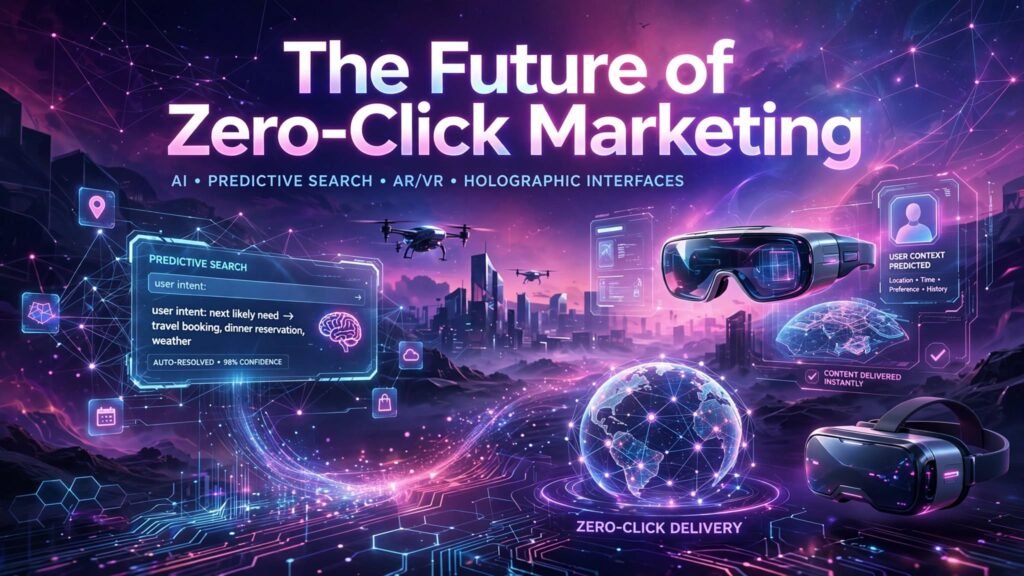
The future of search is moving beyond the traditional model of “search → click → website.” Users are increasingly discovering information through AI-powered answers, social platforms, voice interfaces, and conversational search experiences. As this behaviour evolves, Zero-Click Marketing is becoming an important part of how brands build visibility and influence customer decisions.
AI-First Search
AI is becoming an increasingly important layer between users and information. Instead of simply presenting a list of webpages, AI-powered search experiences can understand context, summarize information, answer follow-up questions, and help users compare options.
For brands, this means content needs to be useful not only for traditional search engines but also for AI-driven discovery. AI Search Optimization and AI Search Marketing can help businesses structure their information around expertise, relevance, clarity, and authority.
Search Without Clicking
Search Without Clicking is likely to remain an important part of modern digital discovery. Users may find answers, business information, product details, reviews, or recommendations directly within the search experience.
This does not make websites irrelevant. Instead, it changes the role of the website. Search can create initial awareness, while the website can provide deeper information and convert qualified interest into leads or customers.
Conversational Discovery
Search is also becoming more conversational. Instead of entering short keyword phrases, users can ask detailed questions and continue with follow-up queries.
This creates opportunities for brands to build content around complete questions, natural language, customer problems, and different stages of search intent. A strong Zero-Click Content Strategy can help brands become visible during these conversational discovery journeys.
Brand Authority Will Matter More
As users encounter information across multiple channels, brand authority becomes increasingly important. Consistent business information, expert content, genuine reviews, credible mentions, and strong digital presence can help establish trust.
The future of Zero-Click Marketing is therefore not just about appearing in search results—it is about becoming a recognizable and reliable source of information.
GEO + SEO
SEO and GEO (Generative Engine Optimization) are becoming connected parts of modern search strategy. SEO focuses on visibility across traditional search environments, while GEO focuses on improving a brand’s representation within generative AI experiences.
Businesses can benefit from thinking beyond a single ranking position and building content that works across both traditional and generative search.
Multi-Platform Search Behaviour
Customers no longer search exclusively on Google. They may discover information through YouTube, Instagram, LinkedIn, marketplaces, AI tools, maps, and other digital platforms.
This creates a multi-platform search environment where brands need consistent messaging and useful content across different channels.
The future of Zero-Click Search is therefore not about eliminating website visits. It is about making brands discoverable wherever customers search, ask questions, compare options, and make decisions. Brands that combine SEO + GEO + AI Search Optimization + strong content can build visibility across this evolving digital ecosystem.
FAQs About Zero-Click Marketing
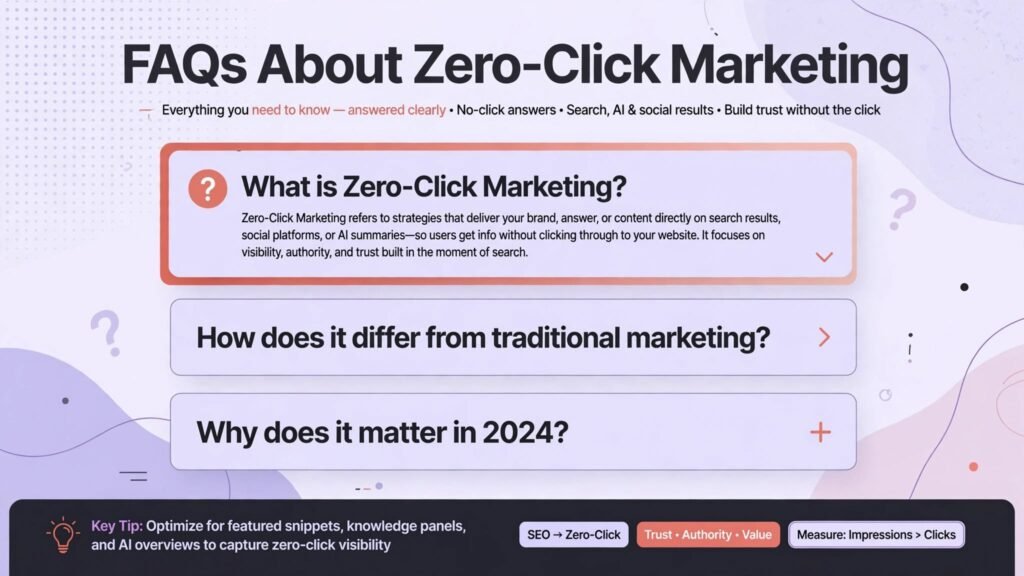
What is zero-click marketing?
Zero-Click Marketing is a digital marketing approach focused on making a brand visible and useful even when users do not click through to a website. It includes visibility across featured snippets, local search results, People Also Ask, social platforms, AI-generated answers, and other search experiences. The goal is to build awareness, trust, and influence before or without a website visit.
What is a zero-click search?
A Zero-Click Search occurs when a user gets the information they need directly on a search results page without clicking an external website. Examples include featured snippets, business information, quick answers, maps, knowledge panels, and other search features. These Zero-Click Searches are changing how users discover information online.
Why are zero-click searches increasing?
Users increasingly expect quick and convenient answers. Search engines and AI-powered platforms can provide information directly within the search experience, reducing the need to visit multiple websites. Conversational search, voice search, AI-generated answers, and improved search features are contributing to the growth of Search Without Clicking.
Is zero-click marketing replacing SEO?
No. Zero-Click Marketing does not replace SEO. Instead, it expands the traditional SEO approach. SEO continues to focus on organic search visibility and website discovery, while a broader zero-click strategy also considers featured snippets, brand mentions, local visibility, AI search, and other search experiences. Combining SEO with AI Search Optimization and GEO can create a more comprehensive visibility strategy.
How can small businesses use zero-click marketing?
Small businesses can start by answering real customer questions, optimizing their Google Business presence, creating FAQ content, targeting local search queries, collecting genuine reviews, and publishing useful educational content. They can also build a Zero-Click Content Strategy around common customer problems and optimize important business information for AI and search platforms.
What is AI search optimization?
AI Search Optimization is the process of making a brand’s information clear, authoritative, relevant, and easy for AI-powered search systems to understand. It involves creating helpful content, demonstrating expertise, maintaining consistent business information, answering real questions, and strengthening overall digital authority. It is an increasingly important part of AI Search Marketing.
Does zero-click marketing reduce website traffic?
Not necessarily. Zero-Click Marketing can increase brand exposure without requiring an immediate website visit, while strong visibility can also encourage users to search for the brand or visit the website later. Website traffic remains important for detailed information, lead generation, and conversions. The goal is to combine zero-click visibility with website performance rather than treating them as alternatives.
Conclusion — Win the Search Before the Click
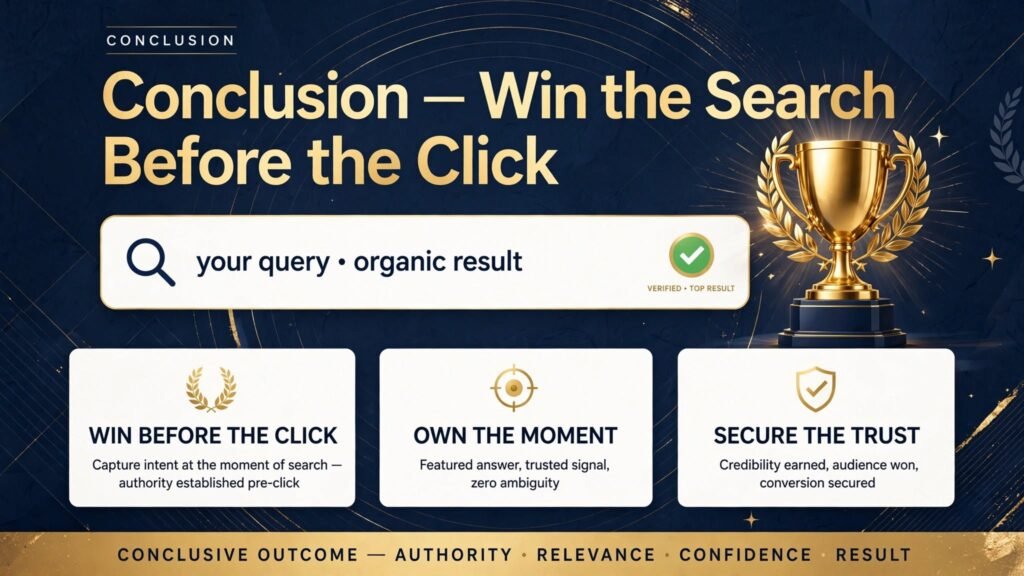
The digital search journey is changing. Users are no longer dependent on clicking through multiple websites to discover information, compare options, or make decisions. From Zero-Click Search and featured snippets to AI-generated answers, social search, and conversational discovery, brands now have more opportunities to influence customers before the click.
That is the core idea behind Zero-Click Marketing: the goal isn’t always to make people click. First, make your brand visible, useful, memorable, and trustworthy wherever your audience searches.
A click is valuable, but it is only one part of the customer journey. A person may discover your brand through a Google result, see your content on social media, encounter your business in an AI-generated answer, remember your name, and visit your website days later. Building visibility across these touchpoints can create stronger brand awareness and improve the path from Discovery → Trust → Click → Conversion.
This is why modern digital marketing needs to go beyond traditional traffic-focused strategies. Businesses need a combination of SEO, GEO, AI Search Optimization, content strategy, social search, paid advertising, and a strong digital presence.
At The Rohit Creative Hub, we help brands build that broader digital presence through SEO, GEO/AI Search Optimization, Social Media Marketing, Google Ads, Meta Ads, Content Marketing, Website Development, and Branding.
Whether your goal is to improve search visibility, generate qualified leads, strengthen your brand authority, or create a stronger online presence, the focus should remain the same: be present where your customers are searching and provide value before they ever click.
Because in the future of search, winning the click may start with something more important—winning the customer’s attention and trust first.
The Rohit Creative Hub — Grow Digital. Grow Smart.